Scientific framework
What Needs To Be Tested
Environmental regulation in the United Kingdom turns on one framework: a source, a pathway, and a receptor. All three must be present for harm to occur. This page sets out how that framework applies here.
Evidence graph
The images behind the model
Each source, pathway and receptor in the model below is anchored to visual evidence held in the reports.
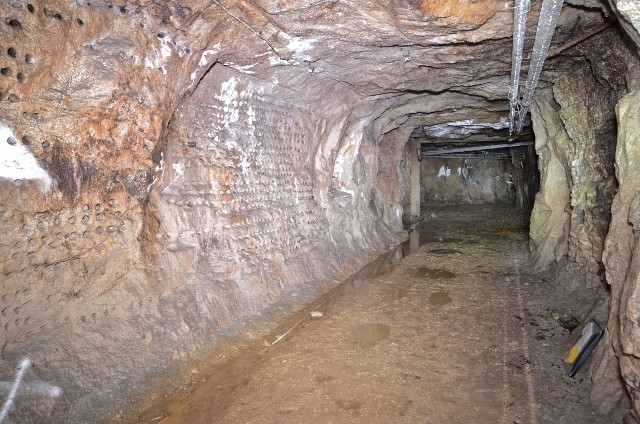
Underground tunnel, granite host rock
Photograph of an underground excavation in granite with a graded floor and a side chamber opening. The operator states excavations are predominantly in igneous intrusive granite with some minor mineral veins.
Source: Operator-published material reproduced in the master dossier
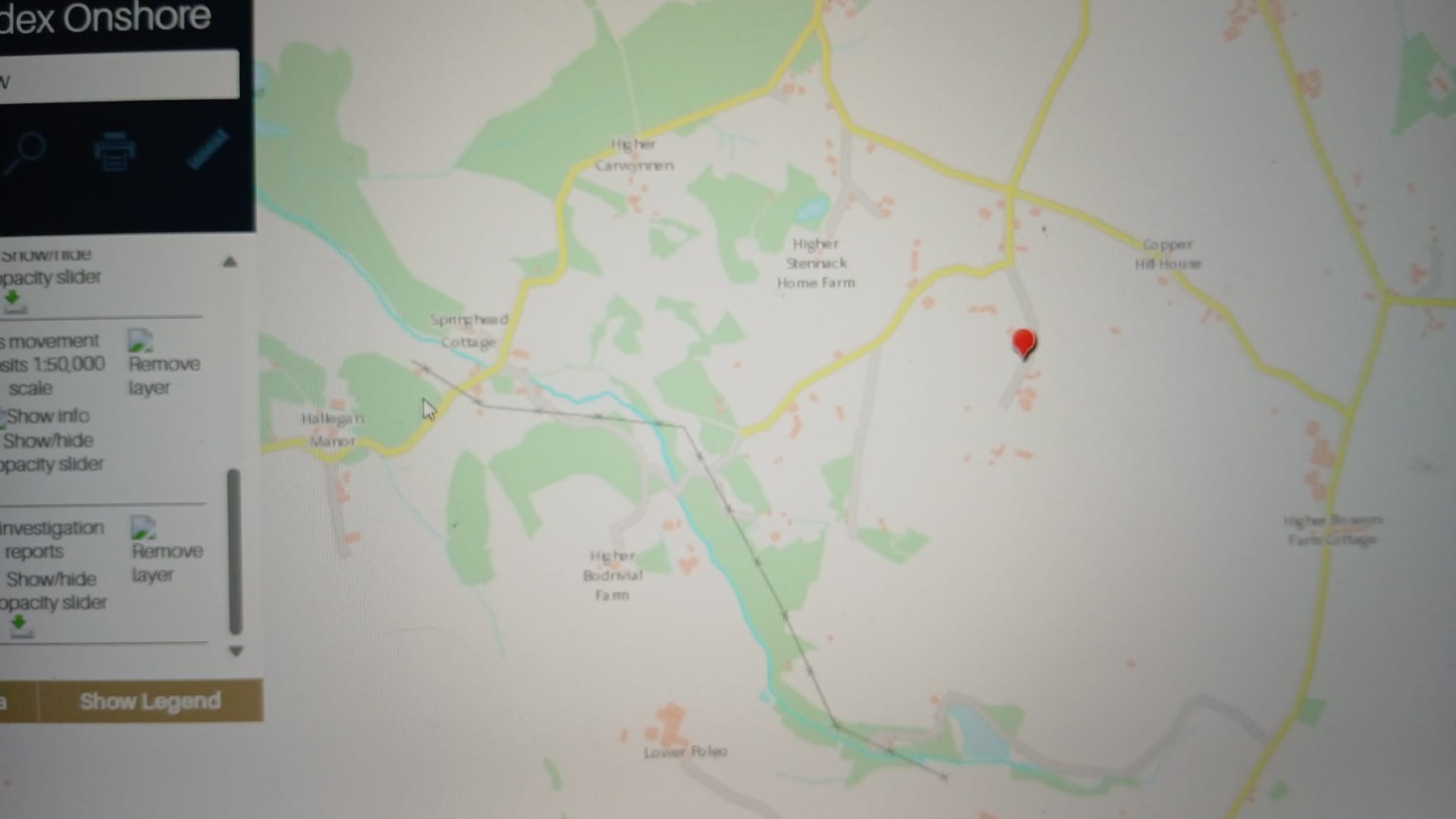
BGS GeoIndex Onshore — Carwynnen sheet
British Geological Survey GeoIndex Onshore viewer centred on the Carwynnen / Higher Bodrivial area, with mass-movement deposits and site investigation report layers enabled. The red pin marks the reference location used in the report.
What this does and does not show: A black cross-marked line runs north-west to south-east across this extract. It is a mapped linear geological feature — a reported weak fracture / structural lineament corridor. It is now shown as an optional layer on the environmental map. Its position on this website is traced from the screen capture and is indicative only.
Source: BGS GeoIndex screen capture, reproduced in the BGS geology & hydrogeology report
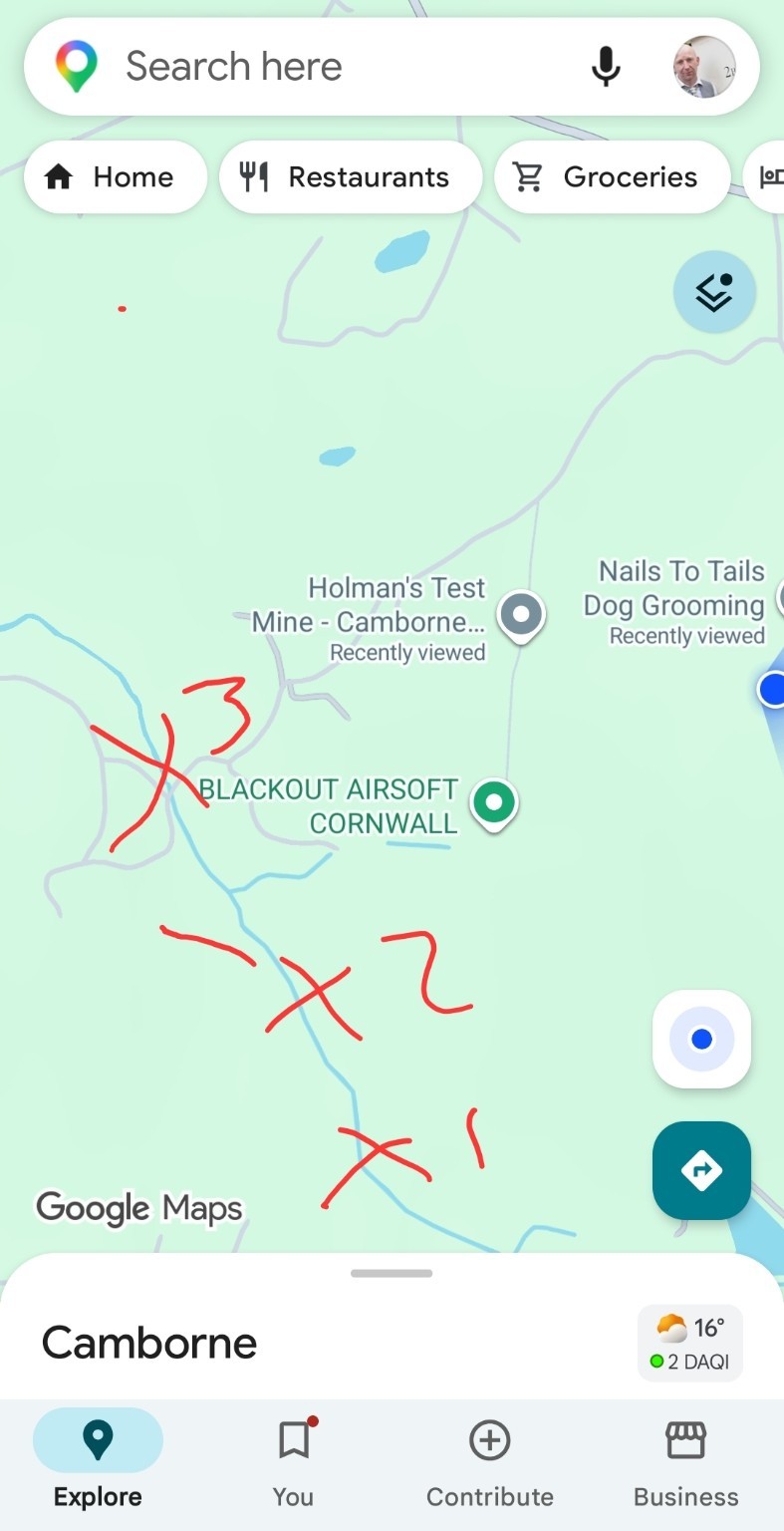
Reported X1–X3 corridor annotation
Mapping annotated by hand with points marked X1, X2 and X3 forming a corridor between the Carwynnen woodland and the facility area.
What this does and does not show: The X1–X3 marks are a reported corridor of interest, not measured sampling stations. Their purpose is to tell surveyors where to look first, not to assert that anything has been found.
Source: Community-supplied annotated mapping, reproduced in the master dossier
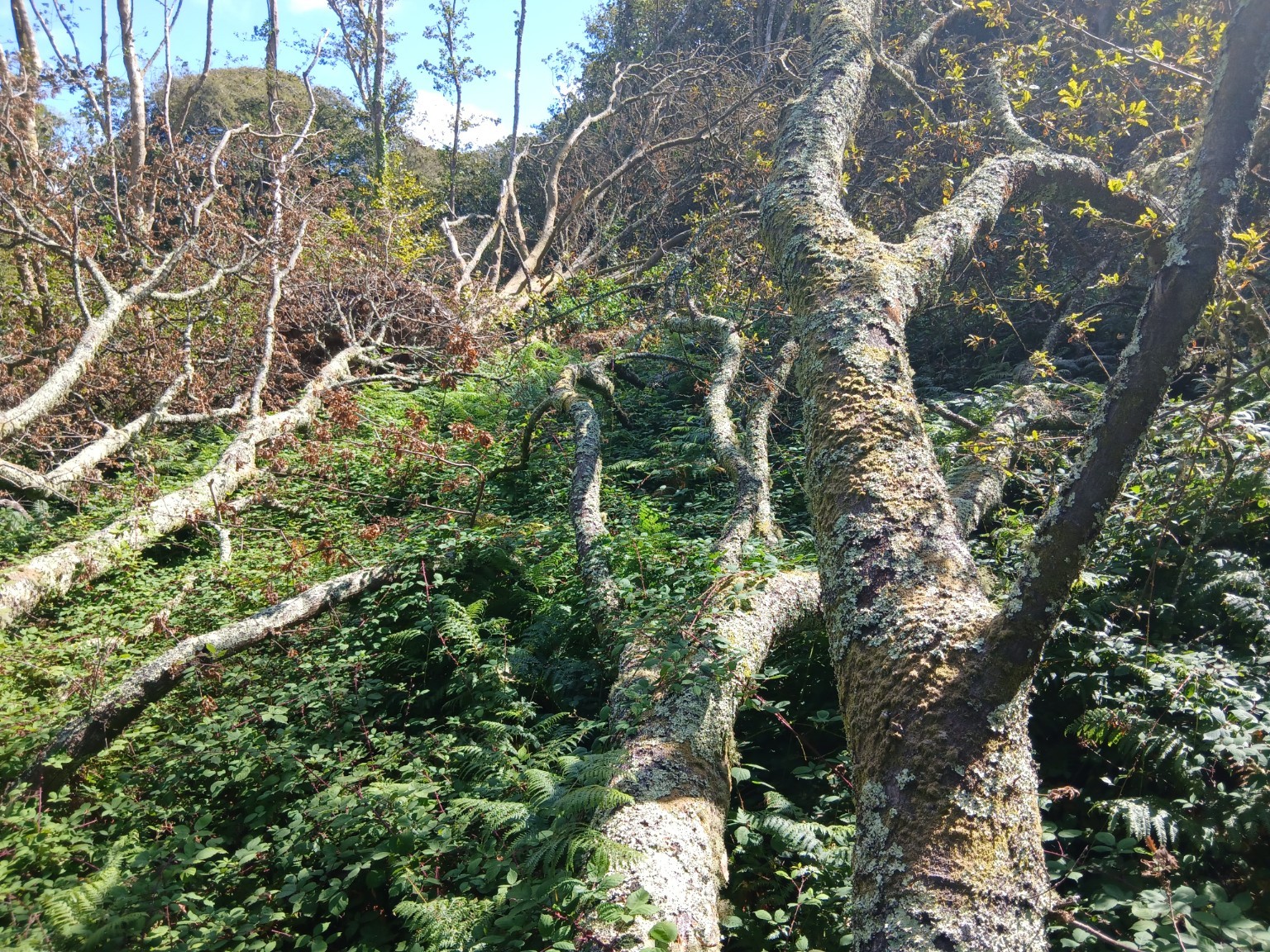
Failure cluster with standing survivors
A group of failures with apparently unaffected mature trees immediately adjacent.
What this does and does not show: Clustering with unaffected neighbours is the observation the investigation is built around. Storm loading alone would not be expected to produce a tight cluster; nor does a cluster by itself establish any particular cause.
Source: X-area tree-failure photographic schedule (Appendix B)
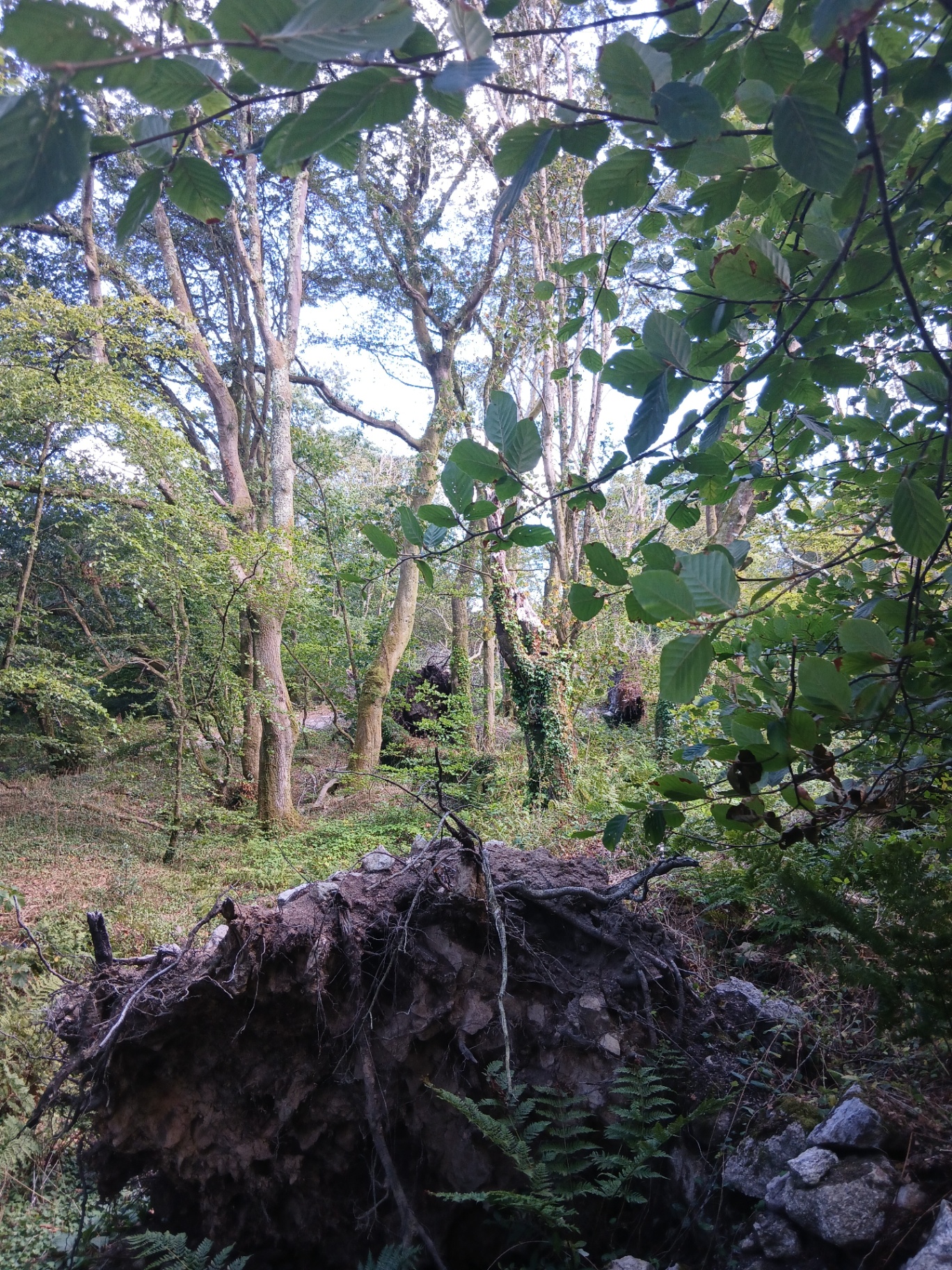
Field survey — root plate and hollow (20 Aug 2026)
Large upturned root plate holding soil and stone, with an open hollow behind it and further failures visible in the background.
Source: Community field photograph, X-area, 20 August 2026
The model
Source → Pathway → Receptor → Evidence
Source
- Underground test chamber activity
- Munitions and energetic materials handling
- Historic mine contamination and spoil
- Historic and current site drainage
Pathway
- Fractures and joints
- Mineral lodes
- Shafts
- Adits and drainage levels
- Stopes and voids
- Tunnels
- Mine water
- Groundwater
- Forced ventilation
- Surface drainage
Receptor
- Springs
- Streams
- Private water supplies
- Soil
- Woodland and trees
- Wildlife
- Farmland and livestock
- Homes and structures
- People
Evidence
- Laboratory analysis with controls
- Groundwater level monitoring
- Geophysical investigation
- Mine-plan analysis
- Blast and vibration monitoring
- Soil and root-zone chemistry
- Ecological survey
- Toxicological assessment
The entries under Source and Pathway describe features that exist in this kind of landscape and require investigation. Listing them is not an assertion that any of them is currently transmitting anything.
What would strengthen a causal case
No single item below would be sufficient. Convergence would be.
- Demonstrated underground connectivity between the source area and an affected receptor
- Groundwater flow direction consistent with that connection
- A distinctive chemical signature at the receptor that is not explained by legacy mining alone
- Event chronology aligning receptor effects with recorded operational events
- Measured vibration at the receptor of a magnitude capable of the observed effect
- Instrument-measured ground movement in the affected area
- A receptor effect matching the mechanism predicted, not merely present
The strongest finding would come from several independent evidence streams converging on the same explanation.
What would weaken or defeat it
These findings are equally publishable here, and would be published.
- Mine workings shown to be unconnected to the affected land
- Groundwater demonstrably flowing away from the receptors
- Normal chemistry at affected points, matched against genuine controls
- No energetic compounds or degradation products above detection limits
- Tree failure rates and modes indistinguishable from control woodland
- Sinkholes clearly attributable to specific unrelated historic structures
- Low measured vibration at receptor locations
- No temporal relationship between operational events and reported effects
A project that cannot say what would prove it wrong is not investigating. It is campaigning.
Priorities
The investigations that would settle this
In rough order of value per pound spent.
Obtain the mine plans
Archive abandonment plans, BGS borehole records and any modern survey covering the ground between the facility and the investigation area. This is the cheapest step with the greatest interpretive value.
Who · Archive research; Cornwall Council and BGS records
Establish water baselines with controls
Paired sampling at springs, streams and private supplies alongside genuine control locations, by an accredited laboratory, with method and detection limits recorded.
Who · Environmental geochemist; UKAS-accredited laboratory
Arboricultural and root-zone survey
Failure-mode assessment of each fallen tree, condition assessment of standing trees, and matched soil chemistry against control woodland.
Who · Consultant arboriculturalist; soil laboratory
Geotechnical walkover and intrusive work
Walkover of reported depressions, followed where justified by probing, geophysics or boreholes to establish whether voids or disturbed backfill are present.
Who · Engineering geologist / geotechnical engineer
Independent vibration monitoring
Instruments at receptor locations recording peak particle velocity to BS 7385 or equivalent, so that vibration ceases to be a matter of recollection.
Who · Vibration monitoring specialist
Protected species survey
Licensed bat, dormouse and badger survey at the correct season, with sensitive locations withheld from publication.
Who · Licensed ecologist
Standard of proof
What we will and will not say
If the investigations above are carried out and find nothing, this site will say so plainly and prominently. If they find something, it will be reported with its method, its uncertainty and its limits.
Either outcome is a good outcome for the community, because either outcome replaces uncertainty with knowledge. What serves nobody is a decade of unanswered questions.