Tree failure investigation
The X-Area Tree Failure Zone
Multiple mature trees have reportedly failed within a comparatively concentrated area of woodland. This page sets out what has been reported, what remains unestablished, and precisely what must be tested.
Photographic evidence
Tree failure: what has been recorded
Photographs held in the X-area tree failure report schedule and in community field survey work. Each image is labelled with its source and evidence tier. None of these images, alone or together, establishes a cause.
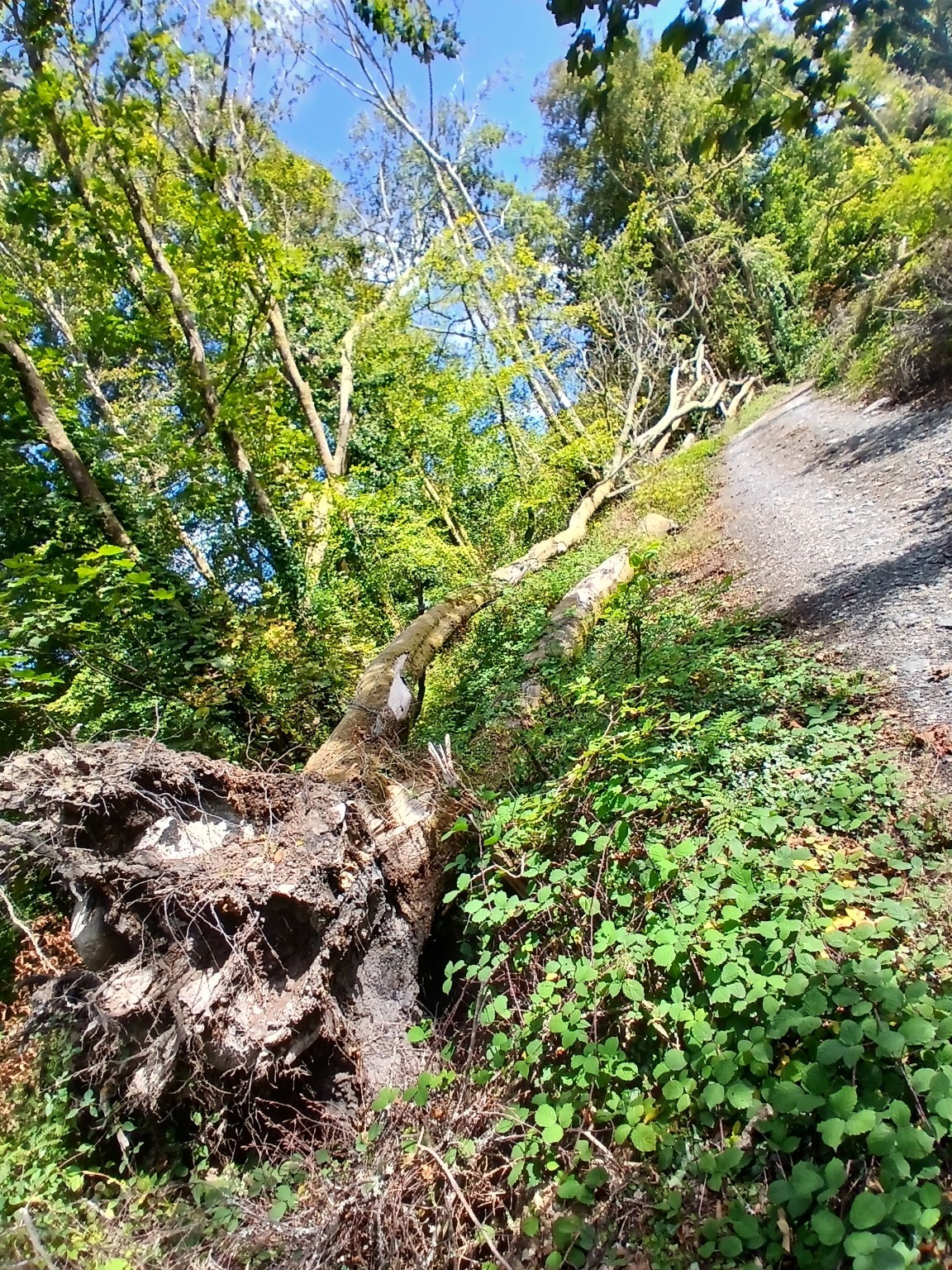
Overturned mature tree with exposed root plate
A mature broadleaf overturned at the root plate, with soil, root mass and stone lifted clear of the ground surface, adjacent to a woodland path.
Source: X-area tree-failure photographic schedule (Appendix B)
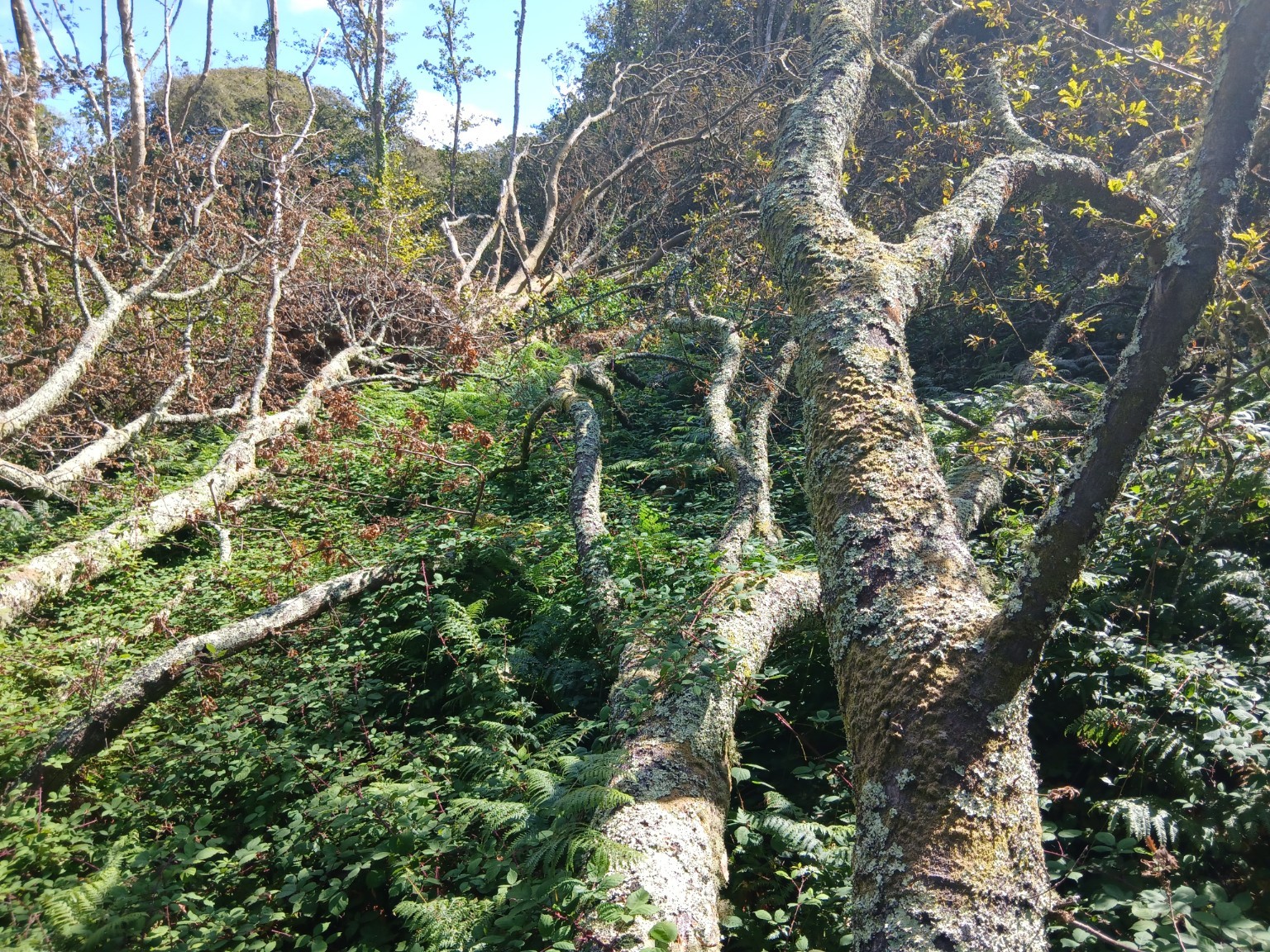
Failure cluster with standing survivors
A group of failures with apparently unaffected mature trees immediately adjacent.
What this does and does not show: Clustering with unaffected neighbours is the observation the investigation is built around. Storm loading alone would not be expected to produce a tight cluster; nor does a cluster by itself establish any particular cause.
Source: X-area tree-failure photographic schedule (Appendix B)
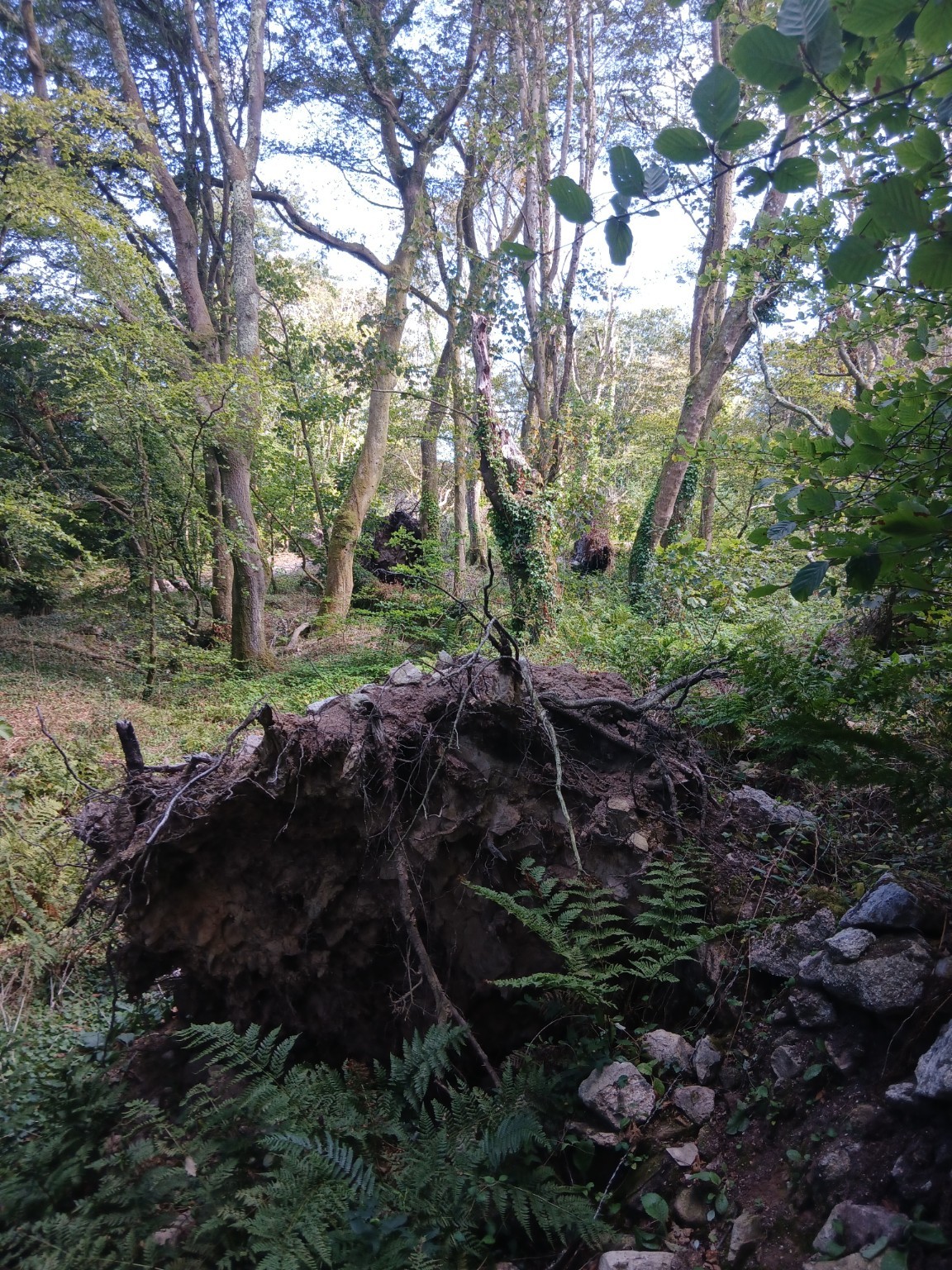
Root plate and depression, second location
Upturned root plate with a hollow behind it. An environmental geologist is reported to consider part of this ground sunken or depressed; this has not been surveyed.
Source: X-area tree-failure photographic schedule (Appendix B)
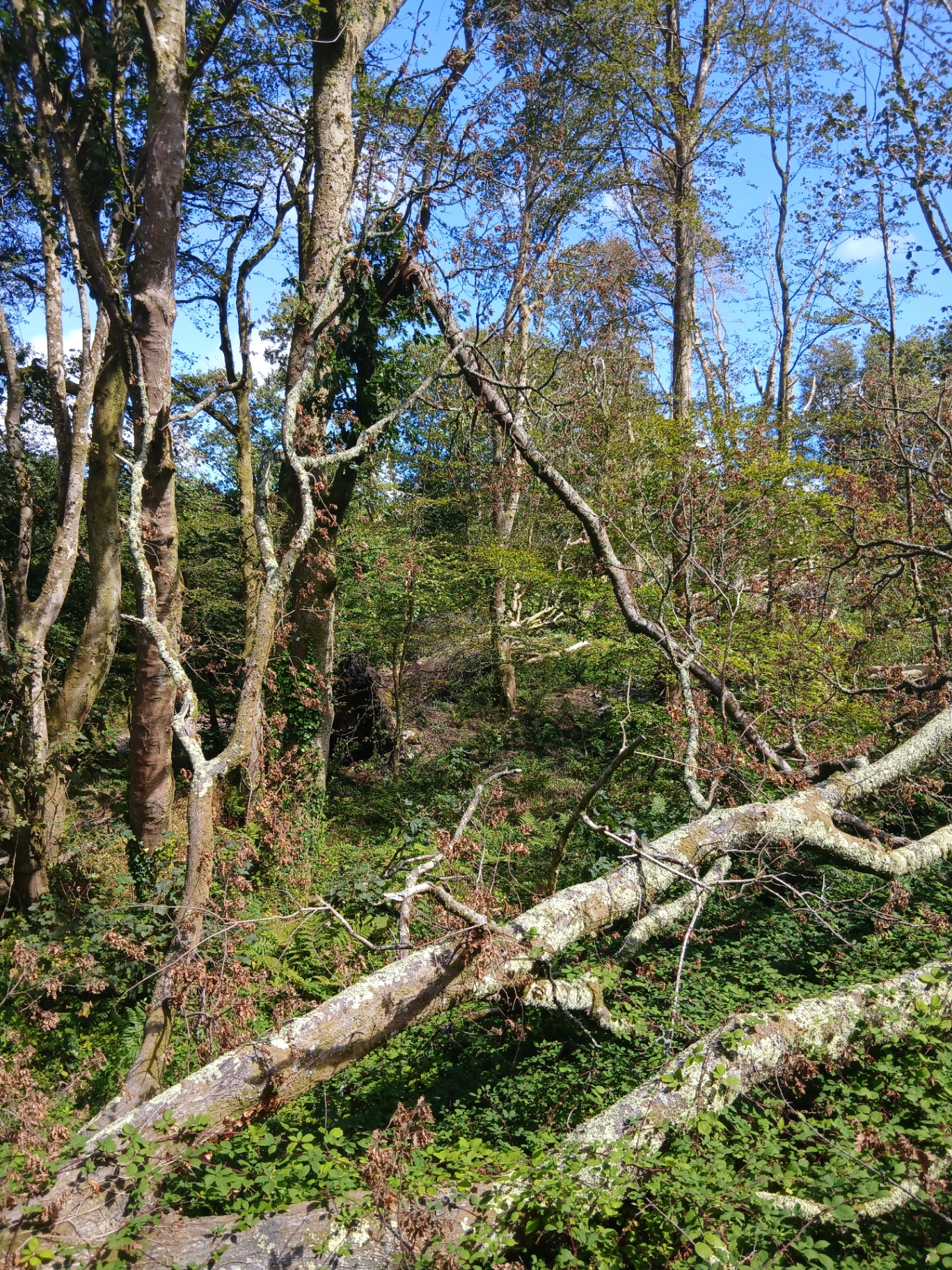
Field survey — canopy dieback with fallen stems (20 Aug 2026)
Fallen lichen-covered stems in the foreground with visible brown, thinning crowns in the standing trees above.
What this does and does not show: Crown dieback alongside physical failure is the pattern that a combined arboricultural and root-zone assessment is being asked to explain. Drought, disease, root damage and altered water table are all live candidate explanations.
Source: Community field photograph, X-area, 20 August 2026
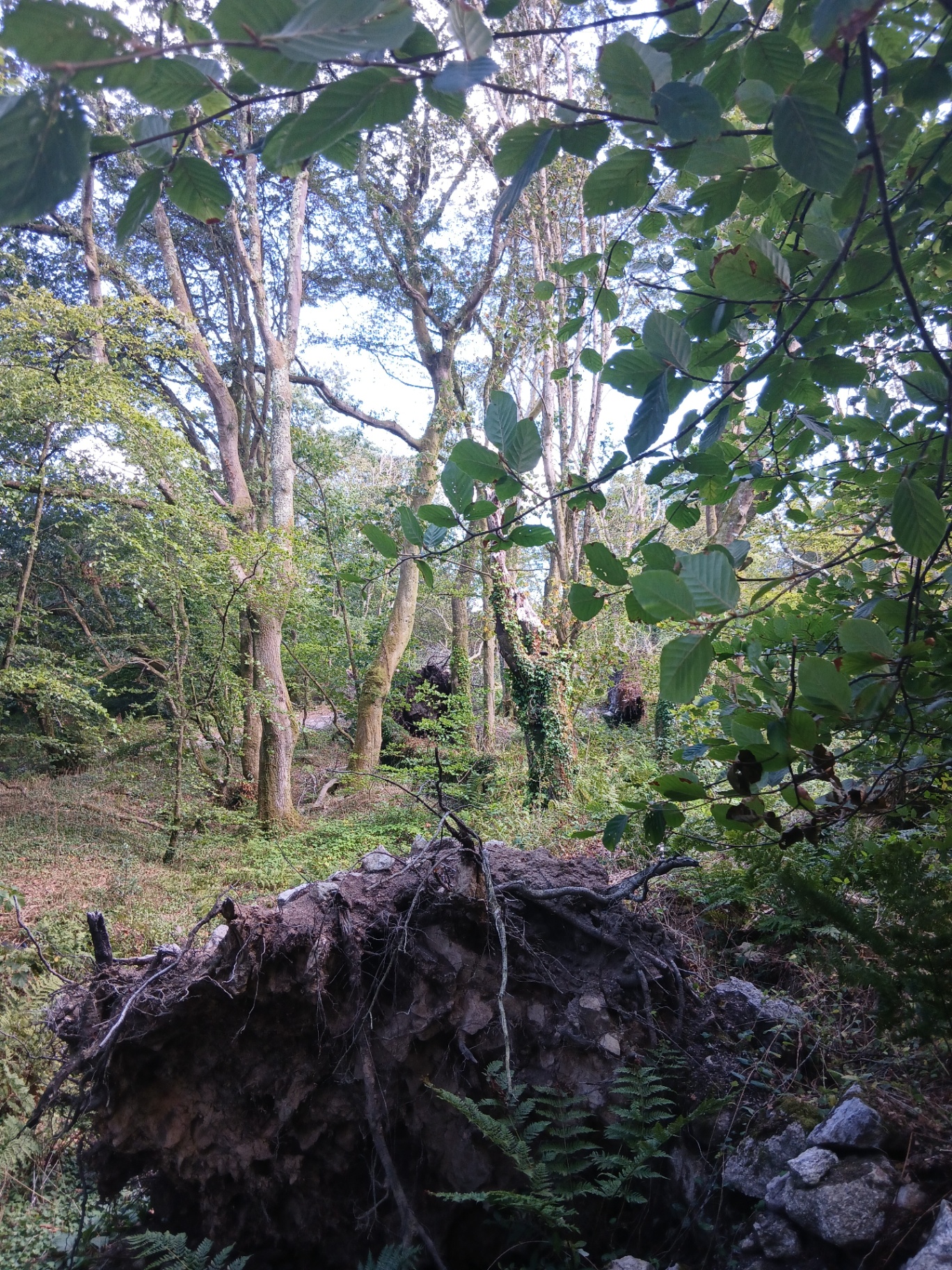
Field survey — root plate and hollow (20 Aug 2026)
Large upturned root plate holding soil and stone, with an open hollow behind it and further failures visible in the background.
Source: Community field photograph, X-area, 20 August 2026
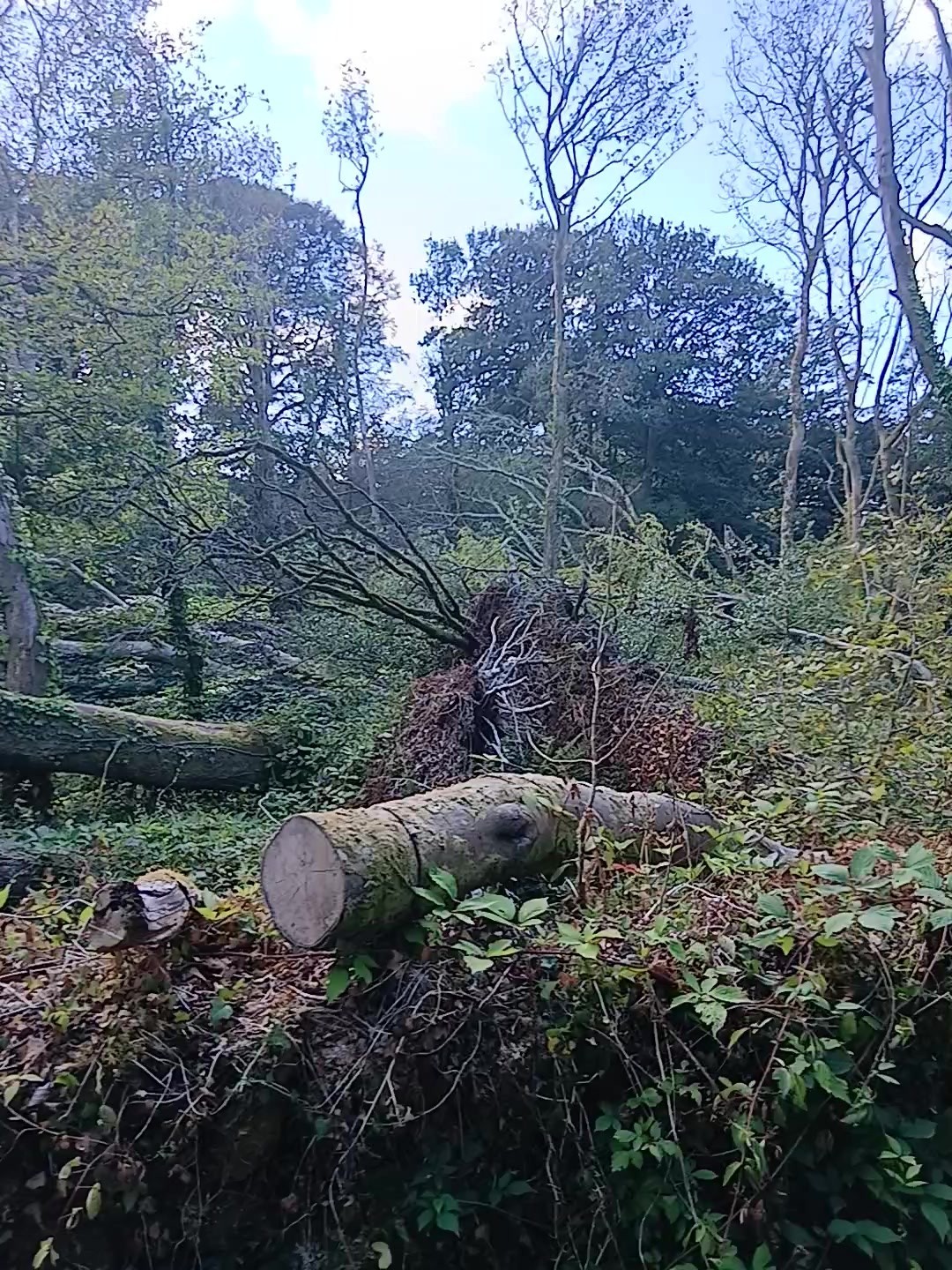
Cut sections at a failure site
Cut timber sections beside a failure site, indicating clearance work after the event.
What this does and does not show: Where failed stems are cut and removed, physical evidence is lost. Recording condition before clearance is one of the highest priorities for this investigation.
Source: X-area tree-failure photographic schedule (Appendix B)
What has been reported
Landowners and site observers report that a number of mature trees have failed within a comparatively small part of the woodland, with several exhibiting fully exposed root plates, and with disturbed and in places apparently depressed or altered ground.
The number, species, condition and precise positions of these trees have not yet been recorded by a qualified arboriculturalist.
Conceptual model
Storm trigger vs underlying vulnerability
A storm can be the immediate trigger for a tree failure while pre-existing ground or root conditions determine why failures concentrate in one particular cluster. Both parts of the explanation matter, and they are established by different disciplines.
Conceptual diagram only. It illustrates a testable hypothesis about how trigger and vulnerability interact. It does not represent measured data and does not attribute cause.
Competing explanations
What could explain a cluster of failures
All of the following require investigation. This project does not state which explanation is correct, and a competent assessment may find that several apply together.
Ordinary storm windthrow
Working hypothesisSevere wind events cause tree failure everywhere. Any assessment must first establish whether the observed pattern is consistent with the storm record for the area, and with failures in comparable woodland nearby.
Waterlogged or weakened root zones
Working hypothesisSaturated soil reduces root anchorage. Prolonged waterlogging can also kill fine roots, reducing stability long before the tree shows crown symptoms.
Local ground settlement
Working hypothesisDifferential settlement can tilt root plates and pre-load trees, so that a modest wind event completes a failure already in progress.
Historic mine workings
Working hypothesisShallow historic workings can influence drainage and stability of the ground above them, independently of any modern activity.
Shallow voiding
Working hypothesisVoids or loosened ground beneath the rooting zone reduce effective anchorage and can create localised, cluster-shaped failure patterns.
Altered drainage
Working hypothesisChanges in where water moves — natural, agricultural or artificial — can waterlog some ground while drying other ground, both of which stress roots.
Root disease
Working hypothesisPathogens such as Armillaria and Phytophthora species cause root decay and windthrow, and can appear in clusters. This requires specialist arboricultural diagnosis.
Soil chemistry changes
Working hypothesisShifts in pH, sulphate, metals or salinity can affect fine-root health and mycorrhizal associations. Testing requires paired control samples outside the area.
Contamination-related stress
Working hypothesisWhere a contaminant pathway is demonstrated, chemical stress can be a contributory factor. A pathway must be demonstrated first; it cannot be assumed from the presence of a facility.
A combination of mechanisms
Working hypothesisReal tree failures are frequently multi-causal. A credible investigation should be able to attribute weight between mechanisms, not simply select one.
Evidence status
Where this stands
Reported cluster
A concentration of mature tree failures within a limited woodland area, with exposed root plates.
Trigger plus vulnerability
Storm loading may act as trigger while pre-existing ground or root conditions determine location. Testable by comparing failure locations against ground conditions and control woodland.
Cause of the cluster
No cause has been established. In particular, no evidence presently establishes that any operation has contributed to these failures.
Next steps
What an investigation should include
A defensible assessment would combine an arboricultural survey (species, age, decay, root condition, failure mode of each tree), a geotechnical walkover with intrusive investigation where justified, a drainage and hydrogeological review, soil chemistry with matched controls, and a comparison against the storm record and against control woodland of similar species, age and exposure.